Wednesday, December 14, 2022

The Immortal Naturalist's Guide to Cryptic Creatures: The Rooftop Clicker

This post is part of the Immortal Naturalist's Guide series. The explanation for that series can be found in this post.
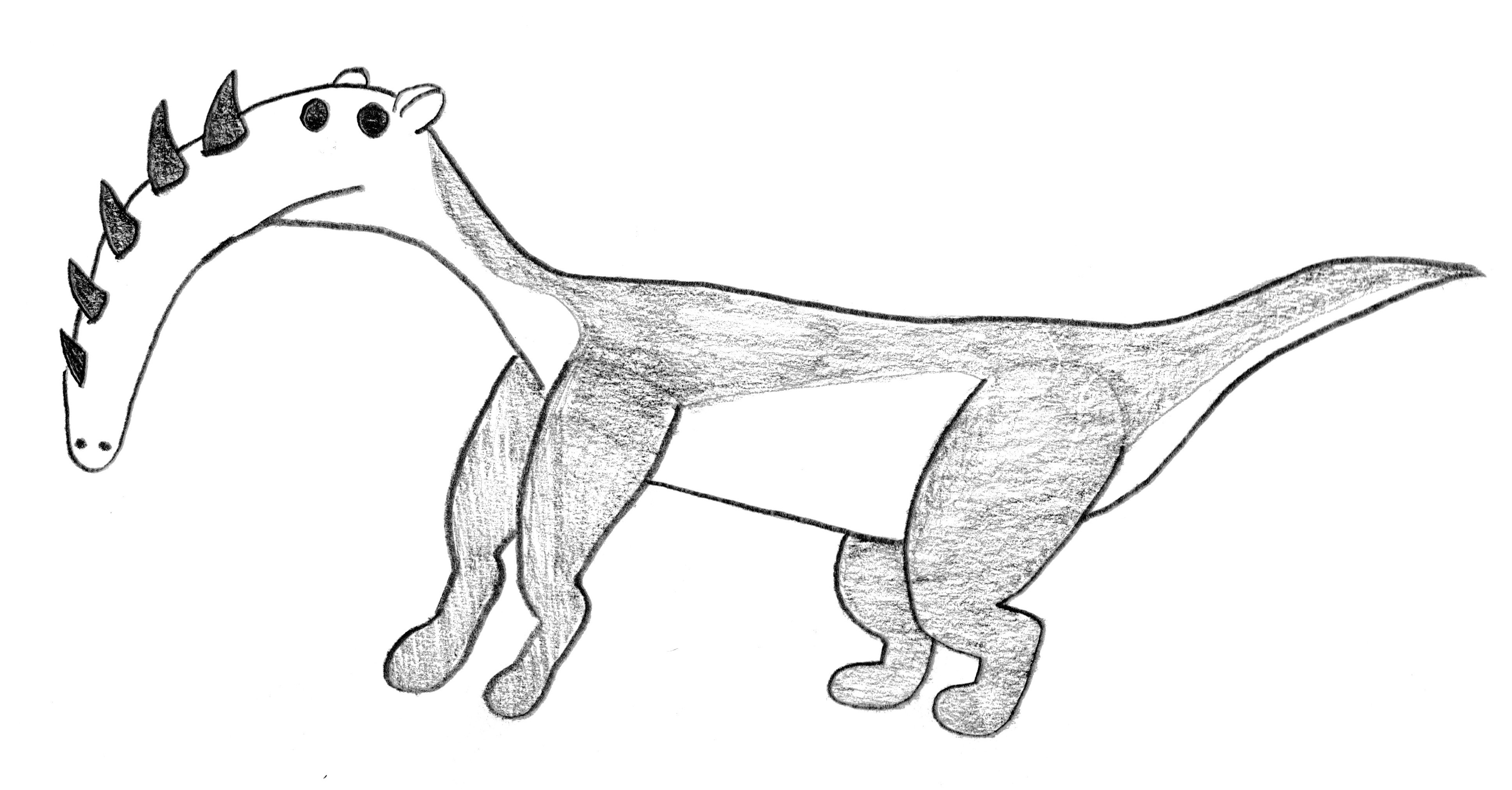
    While it is normal to hear many different sounds at night in a large city, some parents enjoy telling stories to their children about the strange creatures that produce these otherwise mundane sounds. One of these sounds is a distinct, rapid-fire clicking, which stories attribute to a creature known as the Rooftop Clicker. While stories and descriptions vary wildly, there is in fact a real Rooftop Clicker. He stands about three feet tall, is an excellent climber, and he uses his large beak to make his clicking sound. Preferring to run away if anything happens to see him, the Rooftop Clicker seems to prefer to perform in solitude. Should one catch the quick little creature, his beak is actually quite sharp and capable of leaving a nasty gash. As far as food goes, the Rooftop Clicker is able to feed off of the mental anguish of those trying and failing to get to sleep.
    The Rooftop Clicker, when undisturbed, is able to detect the person having the most difficult time getting to sleep in the entire city. He uses this magical sense and climbing skills to make his way to that person's roof, where the Rooftop Clicker will click his beak in irregular, rapid bursts to keep his victim from falling asleep for as long as possible. By standing near his target, the beast is able to absorb the psychic energy produced by the victim's frustration, consuming this psychic energy instead of conventional food. Warding off the Rooftop Clicker is as simple as getting onto the roof and shooing him away, but at that point I would hardly call that a win.
    With great difficulty, I was able to track down the Rooftop Clicker to his nest. Situated inside the attic of an old tavern, the entire nest is coated in a strange, smooth, purple substance. This substance, as it turns out, is regurgitated by the Rooftop Clicker after he feeds, probably a by-product of digesting psychic energy. After it dries, this substance becomes incredibly hard and dense and has been used to create rudimentary furniture in the Rooftop Clicker's nest. This dried substance is harder than diamonds and can be fashioned into incredibly durable and sharp tools with enough work. If the substance is broken, it can be mended by wetting the pieces with water and holding them together for a few moments, making the tools easy to fix as well as durable and sharp.

Tuesday, December 13, 2022

The Immortal Naturalist's Guide to Cryptic Creatures: The Quiffleromper

This post is part of the Immortal Naturalist's Guide series. The explanation for that series can be found in this post.
    Chickens, and more importantly, roosters, are not really found in the bog lands of Squee, making the sound of a rooster exotic to the area. Bog people, however, seem to have legends of a terrible creature from well before their knowledge of roosters which makes an identical sound. This creature is the Quiffleromper, the legendary protector beast of all quiffle bushes. According to legend, this flightless bird stands about ten feet tall, has a whip-like tail which can shatter bones, and a razor-sharp beak which can sever limbs. The Quiffleromper, as its title suggests, will attack anyone who attempts to pick the fruit of a quiffle bush, preceding the attack with its rooster-like call. In reality, the Quiffleromper only attacks those it sees picking quiffle fruit, which is very few people. Regardless, bog people have a cultural taboo against picking the fruits, which is probably for the best. Quiffle fruits, while not being particularly nutritious, have an addictive quality that its consumers attribute to its unique flavor. 
    Aside from being protective of the bushes, the Quiffleromper also has the ability to instantly travel between quiffle bushes by stepping into one and magically stepping out of a different bush elsewhere. This ability seems to come from a lifelong diet of nothing but quiffle fruit, a feat that would be difficult for any other creature to accomplish. Bog person legends speak of one way to ward off the beast, however. If one wishes to safely pick quiffle fruits, all they have to do is coat themselves in a paste of mint, onion, garlic, and ginger. The strong scents are distasteful to the Quiffleromper and will keep the creature at bay for as long as the paste remains potent. 
    Oddly enough, the Quiffleromper maintains a nest, deep in a massive thicket of quiffle bushes. I was able to get to it by sneaking up on the Quiffleromper itself and walking under it while it transported through a quifflebush, repeating the process as a way to observe the creature until it happened to take me to its nest to sleep. Here, I discovered that the creature passes the large pits of the quiffle fruits without breaking them, and it actually alters the pits in the process. After having been swallowed and excreted by the Quiffleromper, quiffle seeds become explosive. When broken, these altered seeds erupt into a massive ball of flames, a discovery that took me by surprise. Of course, once I learned this I grabbed several of these altered quiffle seeds for self defense, which I recommend anyone else with the opportunity do as well.

Monday, December 12, 2022

The Immortal Naturalist's Guide to Cryptic Creatures: The Notorious Beast

This post is part of the Immortal Naturalist's Guide series. The explanation for that series can be found in this post.
    The Notorious Beast is one of the few creatures I've encountered who is not only known worldwide, but also largely believed to be a hoax. This massive creature, nearly thirty feet tall at the shoulder, is seen regularly by those who visit the remote Peninsular Range. Reports uniformly describe a creature which looms over the treetops, leaving a path of trampled and toppled plants that anyone can follow. Pulsating Plums are the creature's favorite food, although it will eat any fruits it can find in the cloud forests it calls home. Should anything try to challenge the Notorious Beast, it can use its tail like a massive whip, capable of snapping large trees in half. Despite this formidable weapon, the Notorious Beast is so large that very few things are able to gain its attention. Conversely, its size makes it difficult for people not to notice it.
    The fact that the Notorious Beast is so large makes it hard to miss, but the remoteness of its home means that very few people actually have the opportunity to see it in person. This is where the notoriety of the beast comes in. For some strange reason, anyone who sees the Notorious Beast is magically compelled to tell everyone they meet about it for up to a year after seeing the creature. A secondary part of this magical effect seems to be that anyone who hears about the Notorious Beast but hasn't seen it will assume that they are being lied to. Due to the low number of people who have actually seen the creature, this has led to global derision at the idea of such a creature, and even resulted in the rather sarcastic name bestowed upon it. The magical effect seems to be some kind of defense mechanism to keep attention away from the Notorious Beast, and it seems to be working quite well. As far as curing this effect goes, I found that eating a pulsating plum, the beast's favorite food, does the trick, and will also work as effective bait for the creature itself.
    Related to the effects of viewing the Notorious Beast is the effect gained from covering oneself in a powder made from the creature's shed scales. After several months of following it around, I had amassed quite the collection of shed scales, so I chose to experiment a little. As it turns out, the powdered scales have a strange effect. While they do not turn things invisible or muffle sounds, the powdered scales made it so that other living things simply do not notice whatever is covered in scale powder. In essence, with the scale powder one does not need to become invisible because no one will notice or care that they are there. Of course, it did take me a long time to collect enough scales to grant this effect to myself, but considering my line of work, I actually followed the Notorious Beast for much longer than I had planned to collect a decent supply of scales. The Notorious Beast seems to shed the most during drier parts of the year, but not by much.

Sunday, December 11, 2022

The Immortal Naturalist's Guide to Cryptic Creatures: The Mud Guzzler

This post is part of the Immortal Naturalist's Guide series. The explanation for that series can be found in this post.
    When wandering parts of the bog lands of Squee at night, one may hear a strange sound. This sound is something like that of a howling wind in the distance, although I have personally only ever heard the sound when the air is calm. Local folklore suggests that this sound is produced by some kind of massive, deadly creature that one ought to move away from, but having followed the sound, I can tell you that it is produced by the harmless Mud Guzzler. Standing about ten feet tall at the shoulder, the Mud Guzzler is a nocturnal creature that feeds by sucking mud up through its trunk and filtering out all of the insects, rodents, and bits of organic matter to be digested while the inedible parts are expelled immediately. This feeding method is what produces the terrifying sound that most know the Mud Guzzler by. Although it is generally peaceful, the creature is able to defend itself by blasting mud out of its trunk at assailants. 
    Something about the Mud Guzzler's mud filtering must be magical. This is because the filtered mud that it excretes is lacking in any organic material at all and has the ability reverse the aging process in other animals. I do not know why the beast would grant this effect to mud, but any creature who finds themselves submerged in the filtered mud will rejuvenate at a rate of one year for every hour submerged. In order to produce this magic mud, the Mud Guzzler seems to prefer mud with very few rocks in it. After noticing this, I did a few experiments and found that the creature will generally avoid rocky areas, allowing me to start influencing its direction of travel by putting rocks in areas I did not want the Mud Guzzler to go. Given no choice in the matter, the creature will cease feeding to go find a less rocky area, but only after it has exhausted its nearest supplies of non-rocky mud.
    Even after a few weeks of observing, I never saw the Mud Guzzler return to any one spot to sleep. Rather than maintain a nest, the creature seems perfectly happy to burrow into the mud and sleep wherever it is when the sun comes up in the morning. While this can make finding the creature somewhat difficult until you get close enough to hear it, the magical filtered mud it produces is probably worth more than gold. Unless one provokes the Mud Guzzler, collecting its magical mud should be as easy as following it around and waiting. I think the only reason this resource isn't being exploited is that most people choose to believe local legends when they hear the horrible noise produced by the Mud Guzzler and run away. Simply put, everyone is too scared to go look and find out the truth, which I suppose is a good thing if you're the Mud Guzzler.

Saturday, December 10, 2022

The Immortal Naturalist's Guide to Cryptic Creatures: Martha the Giant Snake

This post is part of the Immortal Naturalist's Guide series. The explanation for that series can be found in this post.
    Measuring nearly two hundred feet long is one of the largest residents of the Damp Plains, Martha the Giant Snake. Martha, like many snakes, is a predator who swallows her prey whole after subduing it. Unfortunately for the people of the Damp Plains, Martha's preferred food is them. The beast's preferred hunting method is to wait until nightfall, sneak into a village, and pick off anyone walking around by themselves. Despite her size, Martha only really needs to eat a few times a month, and she spreads her hunting out between villages, meaning very few people have any idea what the true reason for the disappearances is. While certain legends do describe giant horned snakes such as Martha, almost no one in the Damp Plains suspects the legends to have any real truth to them. Despite this, Martha was actually quite easy to track down. During the day, Martha has a particularly large rocky outcrop she likes to sun herself on, and I happened upon her while looking for a place to eat my lunch about a day after I began my search. The outcrop in question gives a great view of the surrounding plains and villages, which is why I had picked the spot, and evidently Martha appreciates a good view too.
    The few times I witnessed another creature attack Martha, she showed herself to be much faster than one would expect, and she preferred to use her horns as weapons. Without fail, every time she was able to get both horns in contact with her assailant, the unsuspecting creature would be electrocuted to death. This effective use of a magical ability seems to be purely for defense, however, as all of Martha's victims die from a potent venom in her fangs before being consumed. To avoid either fate, it seems like one needs to keep lots of wind chimes and bells around. Martha has sensitive hearing, which she uses to make sure nothing is sneaking up on her, and that also means she dislikes loud, high-pitched noises.
    Once, a group of drunks with bells happened to walk down a village street that Martha was hunting on. I do not know what these people were celebrating, but their activities caused Martha to leave the area with such haste that she actually knocked one of her horns against a building with enough force to gouge the building and chip her horn. After inspecting the piece of horn material, I found that it is able to convert other forms of energy into electricity, and I was even able to have a device made that uses the horn to launch lightning bolts at targets on command. I'm not really sure how one would go about getting a chip of Martha's horns on purpose, but it would be worth it.

Friday, December 9, 2022

The Immortal Naturalist's Guide to Cryptic Creatures: Marteus Goldhide

This post is part of the Immortal Naturalist's Guide series. The explanation for that series can be found in this post.
    The people who live near the mouth of the Mustard River say that if you ever get lost out in the salt marsh, simply call out for Marteus Goldhide and he will appear to lead you home in exchange for nothing more than a bit of food when you get there. While most brush this off as a fairy tale after a few attempts, it turns out that Marteus Goldhide is real, his hearing is just very bad so he needs to be quite close to hear the calls for help. Despite being hard of hearing, Marteus Goldhide, or Marty, as he likes to be called, is quite affable and makes for a very good travelling companion. The beast knows the salt marsh better than anyone else alive and is able to avoid treacherous areas, or places where dangerous animals tend to be, and he claims to feel an obligation to use his knowledge to help others. When I asked how a gold-scaled lizard the size of a bear like Marty came to be, he explained to me that he has been cursed with his appearance, among other details. 
    Long ago, nearly 1,000 years ago by Marty's reckoning, he insulted a witch and now he is cursed with the appearance of a giant golden lizard, an unnaturally long life, and the inability to leave the salt marsh he now calls home. Marteus Goldhide has chosen to use his curse for good and has become a master of his environment, knowing the properties of all of the plants and animals that call the salt marshes home as well as all of the safe routes through them. In the sunlight, he is able to use his gleaming scales to blind anything that tries to attack and he is capable of using his claws if that fails. Marty is a very gentle soul and is unlikely to attack unless provoked.
    Marty has built up a shelter of sorts over the years by moving whatever large rocks and wood he could find into a ramshackle hut. Inside, he keeps a vast collection of mementos and tokens from those he has helped and befriended in the past. Among his collection are medals from several important people of the past, magical trinkets which are unlike any other in the world, and pieces that hold only sentimental value. Marteus Goldhide's collection is worth a thousand king's ransoms, but I think Marty sees it as even more valuable than that due to the memories associated with each object. If there is anything he would quickly jump to violence to defend, it is his collection of trinkets.

Tuesday, December 6, 2022

The Immortal Naturalist's Guide to Cryptic Creatures: Ludwig of the Forest

This post is part of the Immortal Naturalist's Guide series. The explanation for that series can be found in this post.
    When wandering the woods and forests of the Greatest Fork, it is possible to catch a glimpse of a strange creature known as Ludwig of the Forest. Ludwig stands about six feet tall at the shoulder and spends his time wandering through the woods foraging for food. The creature's diet consists mostly of the soft inner bark of trees, something he is able to get by thrashing tree trunks with the spikes on his flexible trunk. This action knocks off and shreds the outer bark and makes it much easier to get at the soft tissue Ludwig prefers to eat. Ludwig is also quite fast, able to range dozens of miles from his nest and still return home to sleep each night. As a result, Ludwig is pretty much only found in his nest when it is dark out and he is sleeping. In order to survive the harsh winters of his home, Ludwig must hibernate each year, going to sleep around the time the leaves fall and waking up around the time new buds form. None of this is to say that Ludwig is peaceful. The beast is incredibly violent, but only towards those who he witnesses cutting down trees. When he sees someone cutting down a living tree, he flies into a rage, charging the offender and shredding them with his spiked trunk.
    Although it may seem odd that a beast who brutalizes trees like Ludwig would dislike those who cut them down, I believe there is a reason for it. Ludwig, as far as I can tell, has the magical ability to sense which trees are close to death. While this is a bold claim, I believe it has merit because the creature only ever seems to feed on trees that are either sick or quite old. Often, the sickliness of the trees are not evident until after they have been killed. Such an ability indicates that Ludwig must care for the overall health of the forest, speeding up the demise of unhealthy trees to keep the overall population strong. Why Ludwig performs this task is beyond me, but I appreciate his work. Other than not getting on his bad side, the best way to ward off Ludwig is to burn pretty much any kind of incense. Ludwig has a very sensitive sense of smell and does not like the strong scent of burning incense.
    If one can find Ludwig's nest, it is quite safe to look inside because Ludwig is either not there or he is asleep. This is a good thing because Ludwig actually keeps a lot of valuable material in his nest. To keep things soft, he shreds up tree bark with his trunk until it is soft and fluffy. Not only is this material excellent bedding, but it can be spun into thread and woven into incredibly soft fabrics. Or if you don't want fabrics, the unprocessed fluff is highly flammable, which is always great. Whatever you want to do with your pilfered bedding, the stuff is very valuable and can also be sold for large amounts of money while being relatively easy to collect once you know where to get it.

Monday, December 5, 2022

The Immortal Naturalist's Guide to Cryptic Creatures: The Leopard Gecko

This post is part of the Immortal Naturalist's Guide series. The explanation for that series can be found in this post.
    One of the few creatures I've encountered that has been mistaken for a god is the Leopard Gecko, a creature that wanders the Cerebral Desert of the Dragon's Maw. A dangerous ambush predator the size of a regular leopard, this scaled beast is cold-blooded and lizard-like despite its more mammalian features. While it maintains a den in an exposed crag of rock, the Leopard Gecko will sometimes spend weeks at a time wandering the desert in search of food. The Leopard Gecko gets all of the water it needs from its prey, usually an unlucky pygmy camel, and it only needs to eat once every week or so due to its lower metabolism. Sunbathing in the morning is a must, and the Leopard Gecko is unlikely to attack a person while it is sunbathing, or if it has just eaten, but that never means it is safe to get lose.
    One incredible ability of the Leopard Gecko is that it can turn completely invisible on the sand. Something about its scaly skin is able to perfectly mimic the texture and color of sand, helping it to sneak up on its prey. This cat also dislikes water, avoiding it as much as possible, although water does not seem to harm the Leopard Gecko in any way. Following this example, the lizard folk of the Leopard Gecko Tribe spent generations practicing their stealth, painting themselves yellow with black spots, and avoiding water as much as possible. These lizard folk believe that by following the creature's example, it will protect their village and grant them some of its powers. Incredibly, some of the most devoted members of the tribe are actually able to channel the Leopard Gecko's powers and gain a sandy texture that makes them disappear in the desert. Also of note is that not once have I ever seen the Leopard Gecko attack a member of the tribe, despite it preying upon several people during my observation period. Clearly, something the lizard folk are doing works.
    Following it to its den, I discovered something strange. Like many lizards, the Leopard Gecko sheds its skin in patches and eats the patches as they fall off. I was able to sneak up on it while it was asleep and remove a shedding patch of skin a little early. After some experimentation, I was able to get this piece of skin to take on the sandy texture the Leopard Gecko uses to hide. By running an electric current through it, I was able to replicate the magical ability. It would be dangerous to get enough materials, and wearing it would probably be rather dangerous, but I can imagine a cloak or something covered in shed Leopard Gecko skin that can be shocked into a sandy appearance would be useful. I could at least get some use out of such a garment.

The Immortal Naturalist's Guide to Cryptic Creatures: The Land Whale

This post is part of the Immortal Naturalist's Guide series. The explanation for that series can be found in this post.
    The lizard folk of the Dragon's Maw live in fear of a creature known only as the Land Whale. While lizard folk accounts are almost never taken seriously by the rest of the world, their tales of this predator the size of an elephant ought to be taken seriously. In order to keep such a large bulk fed, the Land Whale must spend almost all of its waking time hunting the local pygmy camels and giant pelicans. This voracious appetite means that any people who find themselves in the path of the Land Whale are also on the menu. I was able observe through a lot of invisibility potions and leaving out bait. I was then able to follow the creature to its nest, hidden away at the top of a rugged hill and built up from the feathers and fur of all of the beast's recent meals. While the creature will try to sneak up on prey, it is so large that even the trees and bushes of its home cannot hide it for long, forcing the Land Whale to pursue prey over longer distances than it would like.
    How such a creature came to be in the first place is, I believe, the result of a magical experiment. In addition to giving it legs legs, whoever created the Land Whale also made it virtually immortal and highly aggressive to all other living things. The Land Whale's creator, however, seems to be long gone because I have not once witnessed anyone visiting the beast or heard tales of any such thing ever happening. As far as the local lizard folk are concerned, the Land Whale has always been and always will be, leaving the creature's origins a complete mystery. Oddly enough, the beast seems to be fearful of the sound of bells, a fact that I never needed to use, but which some travelers may find useful.
    One thing I can be sure of, however, is that the Land Whale was created with one goal in mind, hypnotic ambergris. Unlike marine whales which rarely produce usable amounts of ambergris, the Land Whale will excrete around five pounds of ambergris every year during the Fall Equinox. Finding and collecting this substance is a dangerous, stinky job given the required proximity to such a violent creature, and one must properly process the substance before it can be used. However, if someone ages the ambergris properly, it can be used to hypnotize others and control their actions. I have not had any opportunities to test the limits of these hypnotic suggestions, but I believe that it is quite powerful. In the wrong hands, such a powerful substance could be quite dangerous.

Saturday, December 3, 2022

The Immortal Naturalist's Guide to Cryptic Creatures: The Lake Giraffe

This post is part of the Immortal Naturalist's Guide series. The explanation for that series can be found in this post.
    Although it sounds unlikely that a large mammal would inhabit a high altitude lake that freezes over every winter, the kobolds of the Short River Valley would beg to differ. Their legends speak of a creature that appears to be a giraffe with flippers and a finned tail that only those with the purest and most lawful souls are able to see. While that last part certainly isn't true, the Lake Giraffe itself is a real creature that lives in the largest lake in the valley, Long Lake. During the summers, the Lake Giraffe spends its time grazing on lakeside plants and grasses, using its long neck to avoid getting too close to shore. Closer to shore, it is likely to be attacked by one of the many land predators of the valley, so the Land Giraffe spends almost all of its time in the deeper parts of the lake. To survive the winter, the Lake Giraffe has an interesting strategy. Much like the alligators further south which survive short freezes by going dormant under the ice, the Lake Giraffe will sit on the bottom of the lake with only its nose above the surface. The Lake Giraffe will then enter a deep slumber until the surface of the lake thaws again in the spring, apparently unharmed by spending months under the ice.
    The Lake Giraffe's cold resistance is due to its fur, which acts as a near-perfect insulator. Despite being covered in a layer of fur no different than a normal giraffe's, it has the magical property of being able to retain the perfect amount of body heat to keep the Lake Giraffe warm and comfortable. I was able to collect some samples and confirm these observations by finding the beast's nose on the lake ice one winter and waiting for the thaw. While it was still drowsy and disoriented, I was able to shave off some fur and get away before the Lake Giraffe was aware of my presence. Overall, the creature is terrified of other animals and will dive under the water, hiding for hours, as soon as it notices movement on land or the lake surface. Because of this bashfulness, I do not believe the creature poses much of a threat to those who happen upon it.
    If one was able to catch it without harming the Lake Giraffe, the creature's fur could be used to make very high quality winter-wear. That said, I believe that if the Lake Giraffe were missing its fur during the cold parts of the year, it would not be able to maintain enough warmth and it would freeze to death. To avoid the needless death of such a majestic creature, I would ask that anyone looking to collect its fur follow a method similar to mine, ensuring that the Lake Giraffe has time before winter to regrow its fur.